

Estimated reading time: 5 minutes · Last updated: 2026-08-10
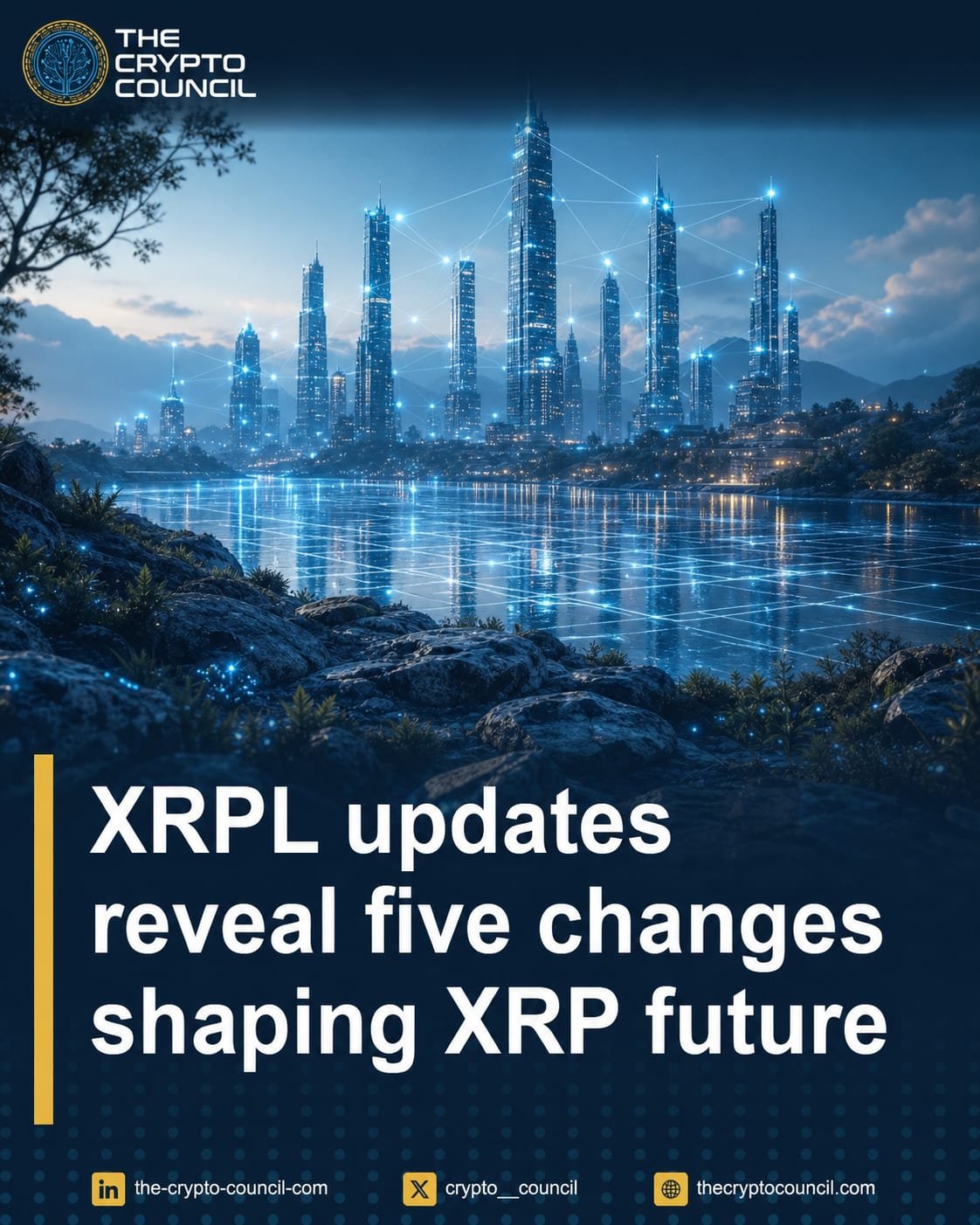
The XRP Ledger is expanding beyond payments in 2026, with five major upgrades designed to bring institutional tokenization, credit and programmable finance to XRPL. Some changes are already live, while others await validator activation or ongoing development. The goal is to embed standardized primitives that reduce contract risk and simplify development, enabling more complex on-chain workflows without relying on unrestricted smart contracts. In context, tokenized real-world assets on XRPL surpassed $474 million and daily transactions reached three million on March 15, 2026, according to recent Ripple-linked reporting. The outcome will hinge on how quickly validators activate features and how much new liquidity these upgrades attract.
Key takeaways
- Tokenization broadens on chain assets: Multi-Purpose Tokens enable fixed-supply assets with metadata and transfer controls, expanding what XRPL can tokenize.
- Regulated markets inside a public ledger: Permissioned domains and DEXes create compliant liquidity pools while keeping transactions on XRPL.
- Programmable settlement grows: Token escrow and smart escrows add controlled release of assets, with a WASM layer under development.
- New credit channels emerge on chain: Single Asset Vaults and the Lending Protocol aim to support native lending for institutions.
Table of contents
Why XRP blockchain updates matter in 2026
XRPL already offers fast settlement, low costs, a native decentralized exchange, and XRP auto-bridging. Yet institutions have long sought native lending and programmable settlement as prerequisites for broader DeFi and real-world asset adoption. The latest upgrades add these capabilities as standardized primitives rather than unfettered smart contracts, which can reduce contract risk and shorten development cycles. In mid-2026 reporting, tokenized real-world assets on XRPL exceeded $474 million and daily transactions reached three million on March 15, 2026, underscoring the potential depth of any uptake as the upgrades come online.
The roadmap targets weaknesses that previously held back institutional engagement with DeFi on XRPL. How quickly regulators and liquidity providers embrace these new primitives will help determine whether XRPL becomes a durable layer for tokenized assets, credit, and regulated settlement rather than a payments rails engine alone. Validation, activation, and practical on-chain use cases will shape the trajectory over the coming quarters.
The five XRPL changes in focus
Multi-Purpose Tokens are XRPL’s second generation fungible token standard. MPTokensV1 began active use in October 2025, and V2 is planned to integrate more fully with the DEX, automated market makers, payments and checks. Issuers can define maximum supply, transfer fees, authorization rules, and metadata, creating fixed-supply assets, restricted holders, or non-transferable tokens. Potential uses include stablecoins, tokenized deposits, bonds, fund shares, loyalty points, and tokenized real-world assets, with immutable metadata connecting to permissioned domains.
Permissioned Domains and Permissioned DEXes create controlled trading environments inside the public XRPL. A permissioned domain defines credential-based access, while a permissioned DEX restricts trading to accounts with accepted credentials. Transactions remain on the public ledger, but which participants can access a given market is controlled. This approach offers a clear institutional use case for compliant liquidity while trading on-chain, though it may fragment liquidity across domains or limit peak pricing. The broader impact depends on how smoothly permissioned liquidity pools scale and interoperate with the open DEX. The rest of the XRPL upgrades extend programmable settlement and custody into institutional workflows.
How the five upgrades fit together
Token Escrow became active on February 12, 2026, allowing trust line tokens and eligible MPTs to be placed into escrow, enabling delayed payments, vesting and milestone releases. The Smart Escrows concept machines a WebAssembly execution layer for programmable conditions, offering oracle-based payouts, delivery-versus-payment settlement, insurance claims and treasury rules. These features aim to broaden enterprise-grade settlement while keeping XRP as a core fee, reserve and bridge asset rather than a general-purpose smart contract platform.
Single Asset Vaults pool assets from multiple depositors and can hold XRP, traditional XRPL tokens or an MPT. The Lending Protocol introduces loan brokers, borrowers, repayment schedules, interest and first-loss capital, with underwriting largely off-chain but key actions recorded on XRPL. Native lending could create new credit channels for trade finance, working capital and private credit, though it may be complemented or eclipsed by stablecoin lending depending on adoption. The final category, Confidential MPTs with zero-knowledge privacy, aims for selective disclosure so institutions can transact while hiding sensitive details, with practical and regulatory considerations still under discussion.
What this means for institutions and markets
The combined upgrades are designed to bring on-chain settlement, tokenized assets and credit closer to institutional workflows. If implemented safely, the changes could expand XRP’s role as a liquidity and settlement backbone, potentially increasing on-chain activity and demand for XRP as a vault asset, loan currency or bridge. The emphasis on privacy and controlled access also addresses real-world compliance needs, while the focus on tokenized real-world assets could widen the universe of asset types settled on XRPL. However, fragmentation risk and the need for usable liquidity across permissioned and open markets will influence practical outcomes.
Investor considerations and next steps
Investors should monitor amendment activation, MPT issuance, permissioned DEX volume, vault deposits, lending activity and tokenized asset value. Theroadmap emphasizes distinguishing live features from proposals, with Permissioned Domains, Permissioned DEXes, MPTokensV1 and token escrow active, while native lending and Smart Escrows remain in development. Liquidity build and cross-market interoperability will determine how these upgrades translate into real on-chain activity and XRP’s role in settlement infrastructure.
As activation progresses, the mix of assets on XRPL and the degree of institutional participation will shape opportunities and risks. Observers should track that activity against broader adoption signals and regulatory developments that could influence how much on-chain lending, tokenized assets and private settlements actually materialize on XRPL.
What to watch next
The XRP Ledger is undergoing one of its most expansive rounds of upgrades in years, aimed at turning XRPL into a more capable platform for institutional tokenization, credit and privacy. The near-term opportunity centers on permissioned tokenized finance, where regulated markets could emerge inside a public ledger. Longer-term potential hinges on lending and privacy features reaching full, safe activation and achieving usable liquidity. The key now is activation, adoption and the emergence of tangible on-chain activity that makes XRP essential for liquidity and settlement rather than merely a small fee asset.
Frequently asked questions
What Are the Biggest XRP Blockchain Updates in 2026?
The major changes include expanded MPT functionality, Permissioned Domains and DEXes, token escrow, proposed Single Asset Vaults and native lending, and privacy development using zero-knowledge proofs.
Is the XRPL Lending Protocol Live?
Not fully. The lending code and documentation exist, but the Lending Protocol and Single Asset Vault amendments must complete validator activation before unrestricted mainnet use.
What Is a Permissioned DEX on XRPL?
It is an order-book market limited to accounts holding accepted credentials. It allows regulated participants to trade on a public blockchain while controlling counterparty access.
Will XRPL Smart Escrows Support Smart Contracts?
Smart Escrows are designed to run custom WebAssembly functions that control escrow release conditions. They provide focused programmability rather than unrestricted general-purpose smart contracts.
Will These Updates Increase the XRP Price?
They could increase XRP utility through fees, reserves, lending, and auto-bridging. Price impact depends on adoption, liquidity, and whether institutions use XRP rather than only stablecoins and tokenized assets.
Reporting based on Bitcoin Foundation.
